
Designing for SMB Growth
A strategic design initiative to understand, map, and reimagine the end-to-end partner experience across Microsoft’s $38B SMB business.
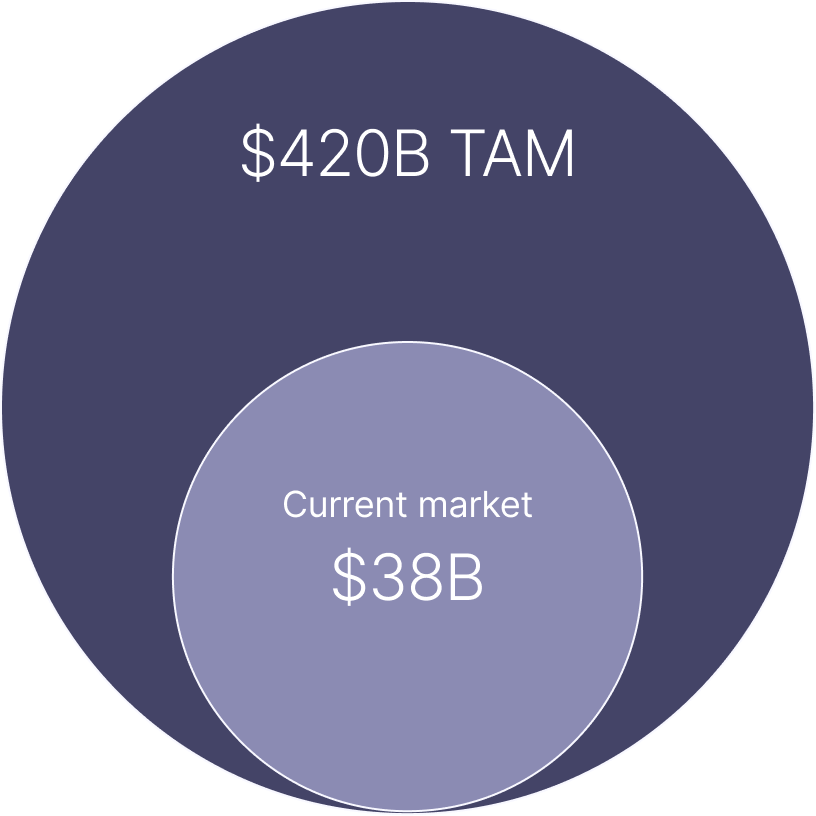
SMB at Microsoft represents a $38B business with a $420B total addressable market.
SMBs remain an underserved segment for Microsoft despite strong partner engagement.
Growing this segment is a strategic priority to unlock new revenue streams and drive long-term growth
PROBLEM STATEMENT
Underserved SMBs represent a $420B missed opportunity for Microsoft, highlighting the need for scalable experiences that drive revenue and growth.
PROJECT OBJECTIVE
Our goal was to understand SMB, research key roles and key archetypes, create as-is journey maps, envision NorthStar map and concepts to help reimagine SMB experience.
The Process
15+
Stakeholder working sessions
13
Interviews with SMB sellers
User profiles and Pain Points
Northstar Journey Map
5
Partner interviews and workshops
As-Is Journey

Partner
Approx 81% of the SMB revenue.
Partner engages with customer throughout the whole deal making process. Partners use their own internal systems, APIs and Partner Center to support core workflows.
The customer initiates contact with the Partner or
the Partner receives marketing signals to engage
with customer.
SMB Archetypes

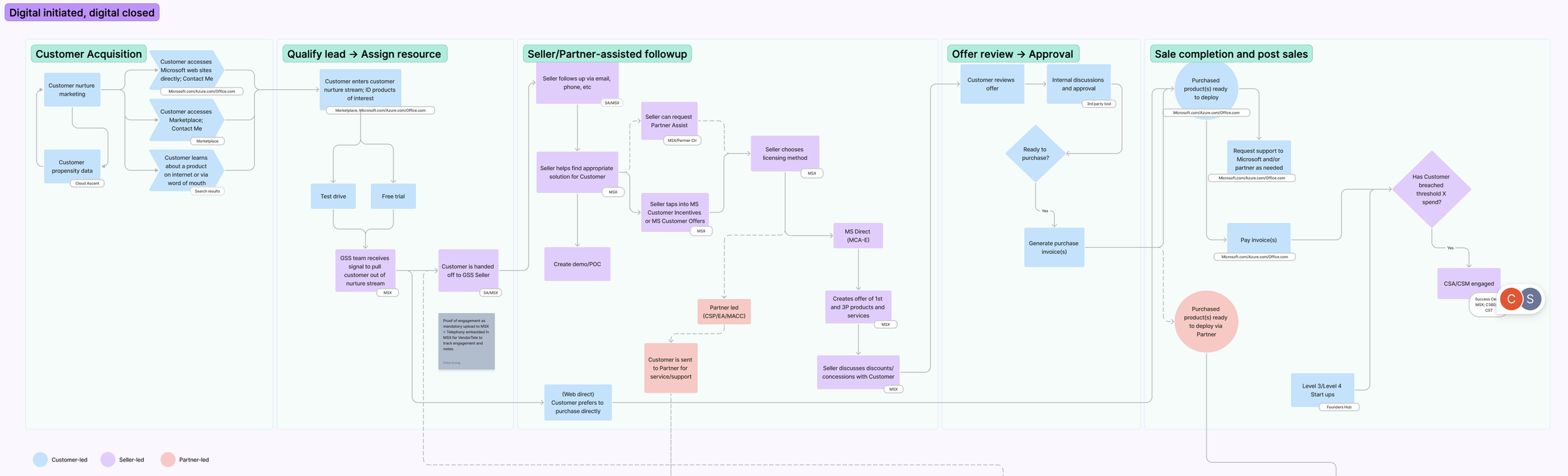
Microsoft Seller
Approx 2% of the SMB revenue.
Customers are directed to MS websites through marketing campaigns.
Vendor tele team receives the signal, qualifies the
lead, and then send it to Partner to close.
Partners will continue the engagement and
close deals.

Customer
Approx 19% of the SMB revenue.
Customers are directed to MS websites through
marketing campaigns.
GSS receives signal to pull customer out of nurture stream and handed them off to sellers to close
the sale.
Initial Research and Insights
Interviewed stakeholders and SMEs to understand the 3 SMB archetypes
Mapped current “as-is” journeys to visualize pain points and inefficiencies.
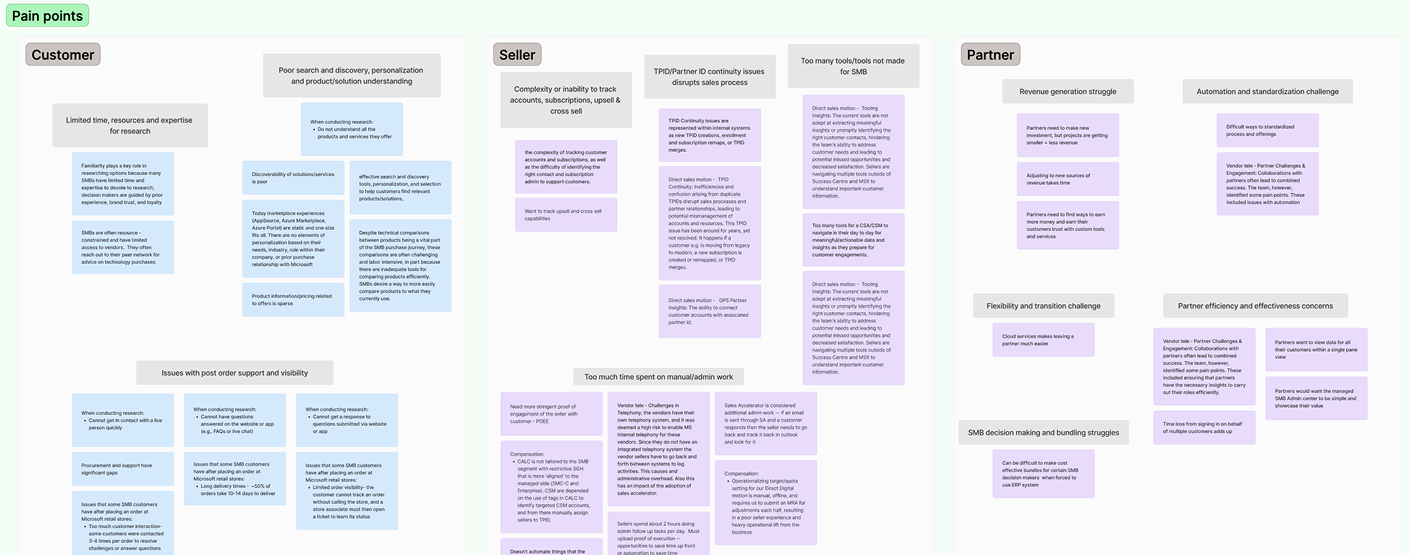
Conducted workshops with stakeholders across archetypes to uncover pain points.
Synthesized findings to identify themes
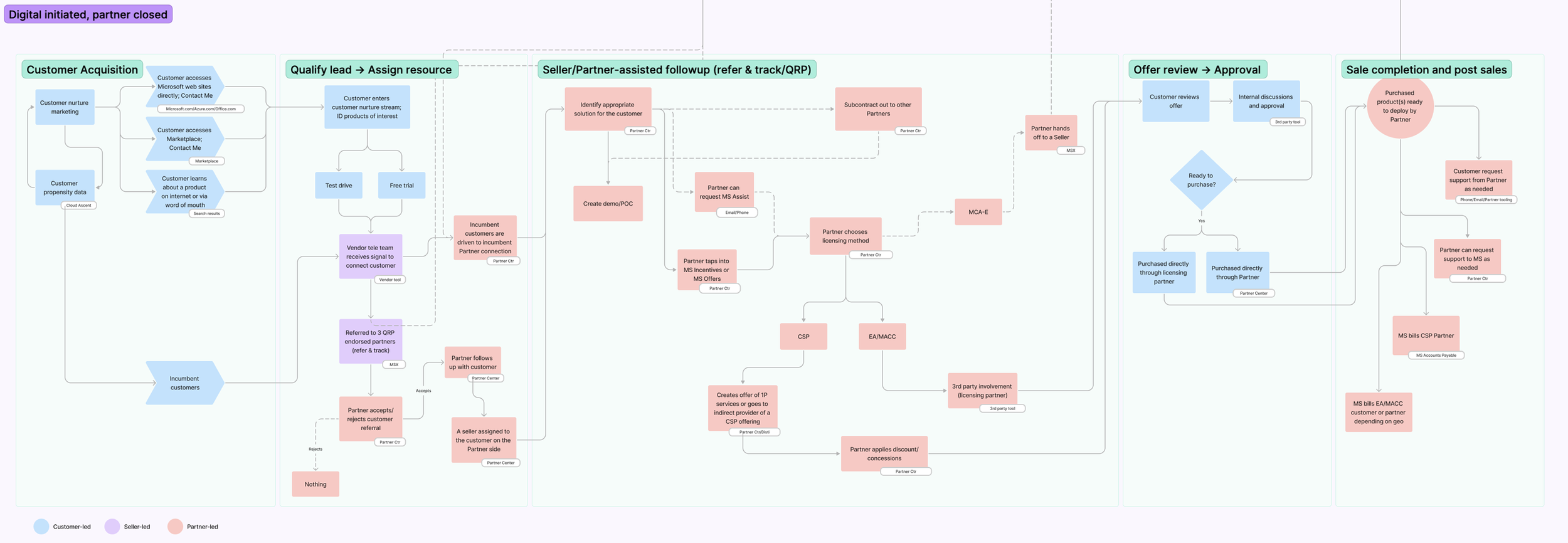
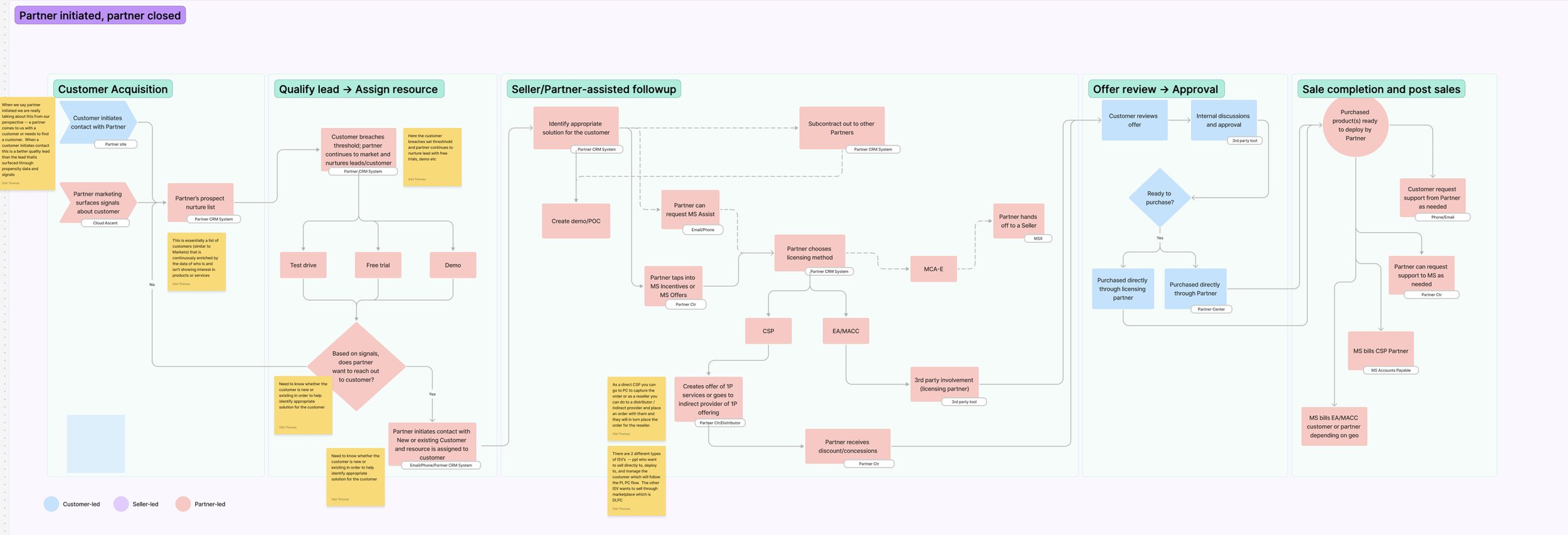

Partner
Approx 81% of the SMB revenue.
Partner engages with customer throughout the whole deal making process. Partners use their own internal systems, APIs and Partner Center to support core workflows.
The customer initiates contact with the Partner or
the Partner receives marketing signals to engage
with customer.
Insights from our initial research revealed Partners are the key to improving the SMB experience.

Lack of comprehensive & historic view of customer
“We desperately need an eligibility portal to go to. Partner or customer x, y, z, are they eligible for that promo? That would solve so many problems. If we tell them about a program before we know if they can leverage it, it opens us up to a different level of liability.”
- Indirect Provider
The following themes emerged as key pain points for SMB Partners

Fragmentation of content and resources
“We leverage everything you send us. You drop everything in many different places, and everything used to run through partner center, and it was a one stop shop. Now there are partner center announcements, journey maps, and webinars, you can imagine it would take an entire team to know about it. I appreciate that you have all these resources, but those things need to be consolidated in Partner Center.”
- Indirect Provider

Need for timely communication of program changes
“If we find things out at the same time as our partners (resellers), we are dead in the water. Even if it is a couple days of lead time, we can sort through our questions and hold them back from opening a million support tickets with you.”
- Indirect Provider

Lack of quality and timely Microsoft support
“Any pain points you are hearing about support are 10x. It’s that bad.”
- Indirect Provider
Secondary Research and Insights
Building on earlier insights, we conducted a How Might We workshop with SMEs (subject matter experts) around the partner archetype and synthesized the outcomes through affinity mapping.
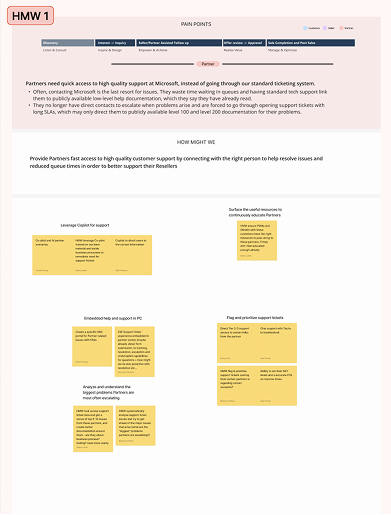
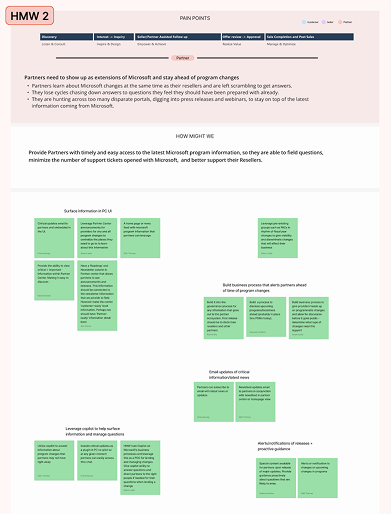
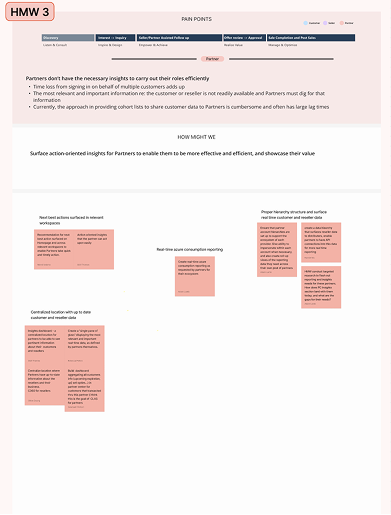
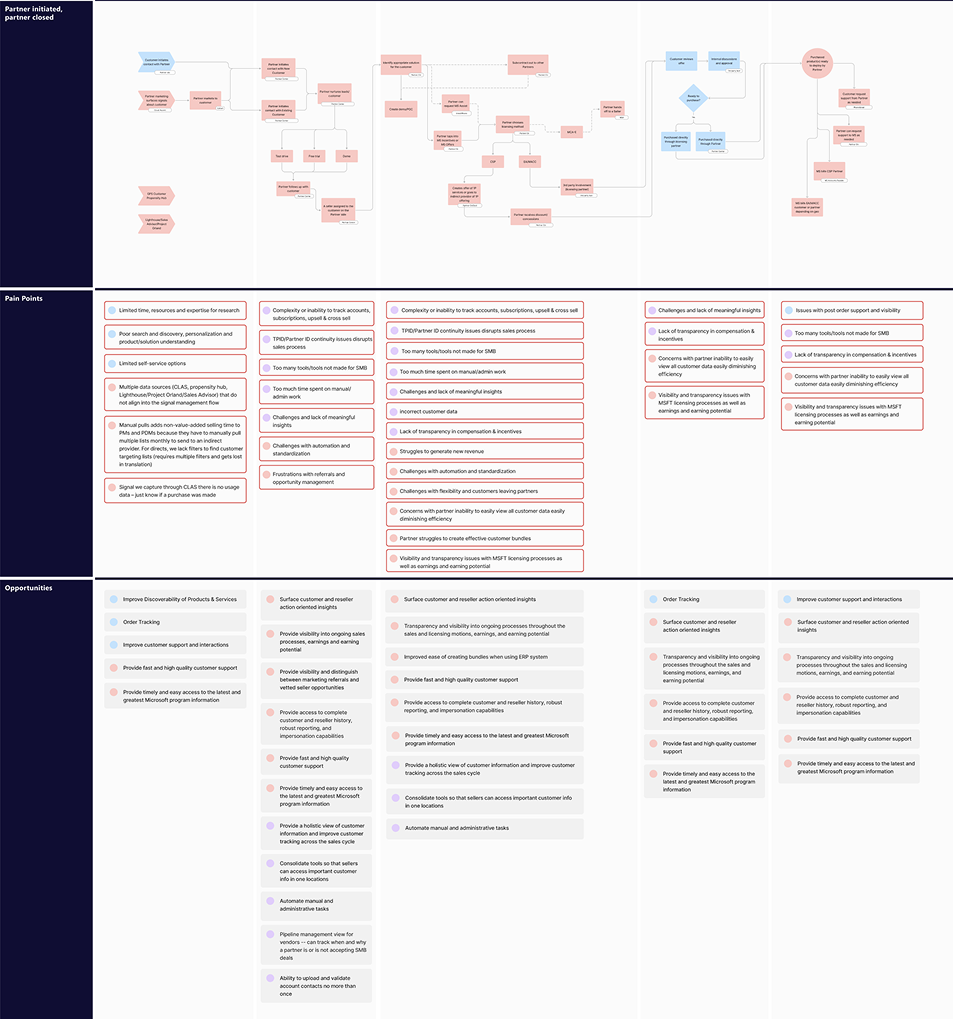
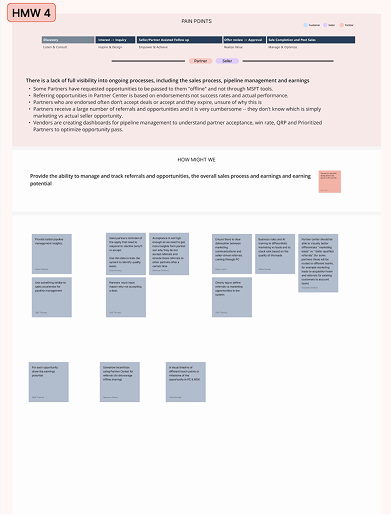
We then consolidated the information gathered from research, interviews, and workshops
Distilled Key Findings
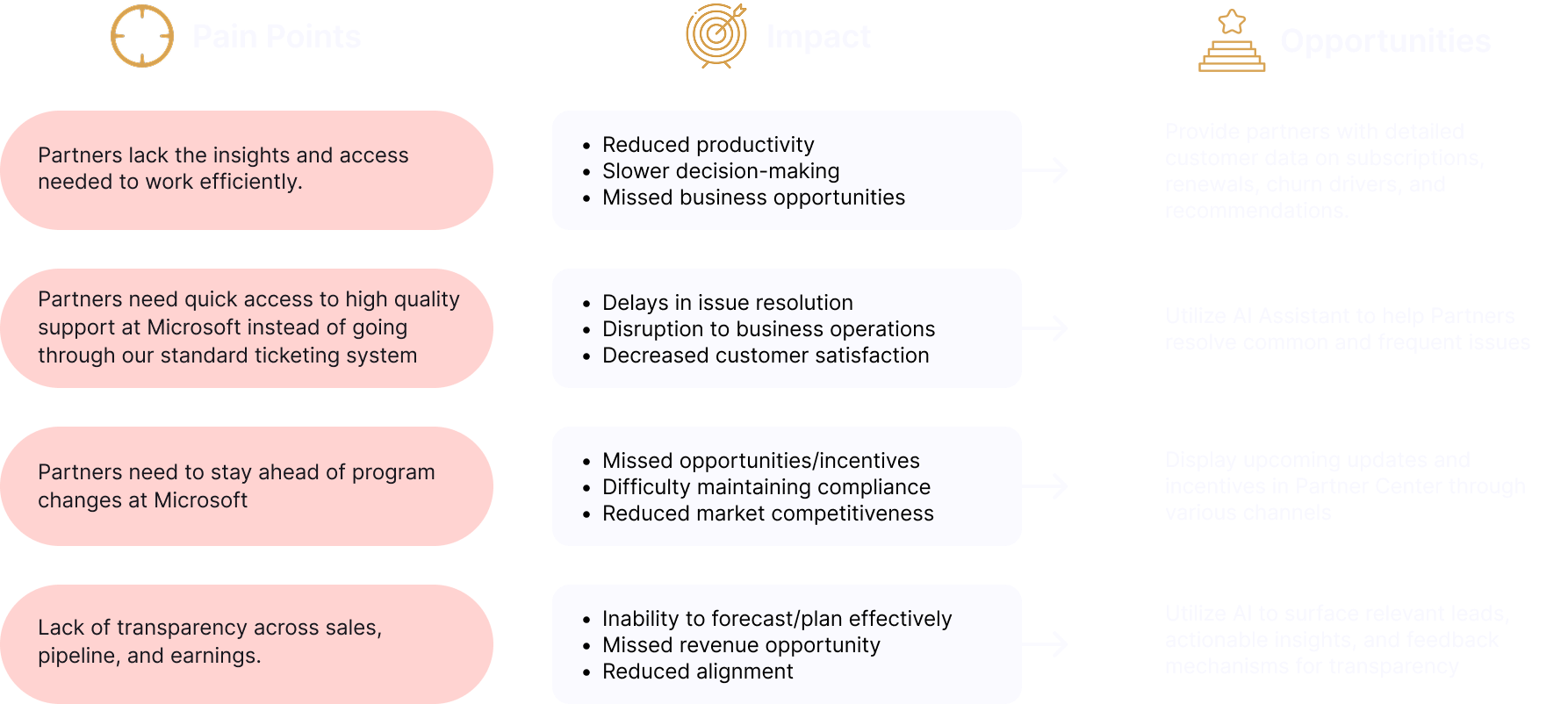
THE NORTHSTAR VISION
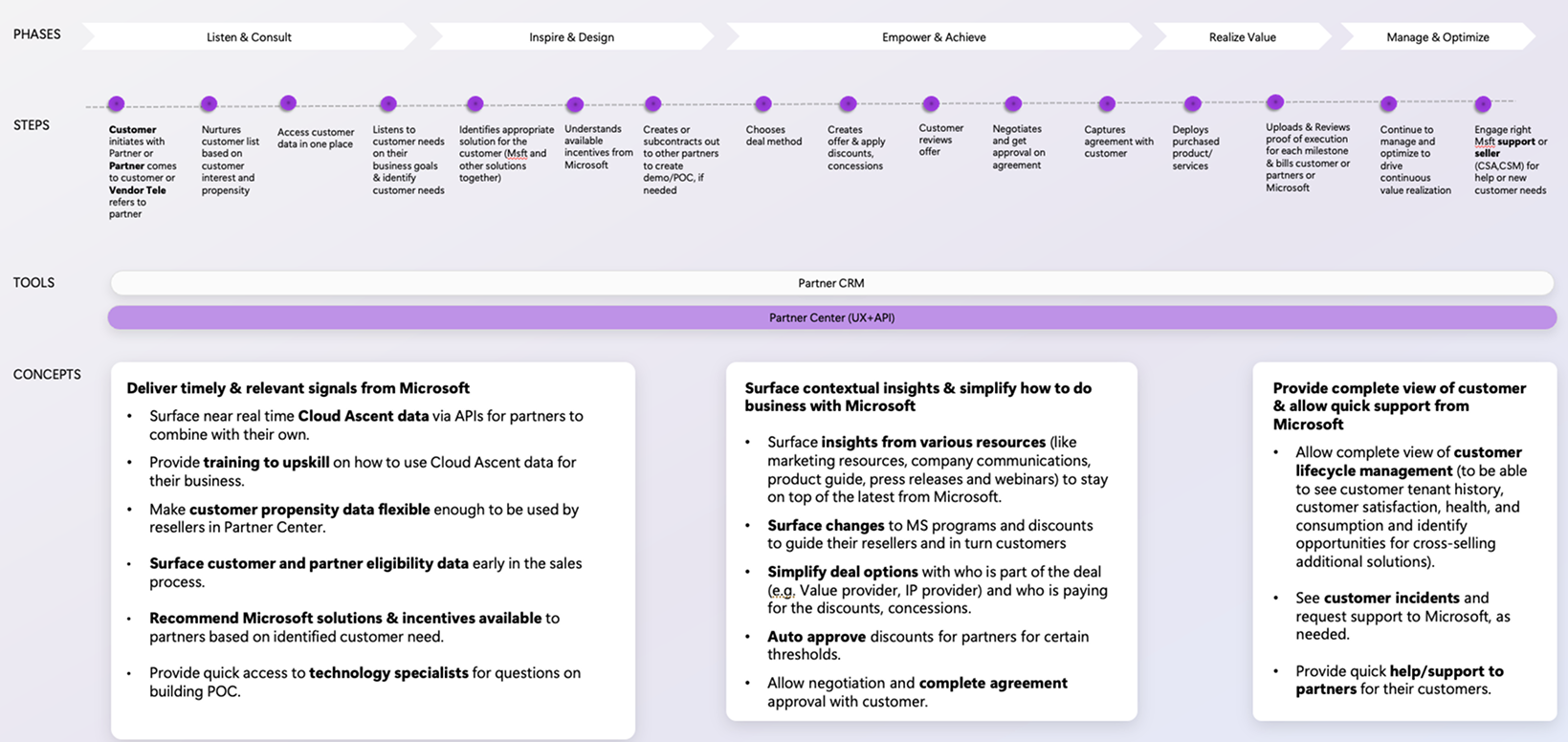
Empower partners with intelligent, data-driven experiences that surface insights, streamline operations, and unlock scalable growth through AI-driven transparency and guidance.
Northstar Concepts
-
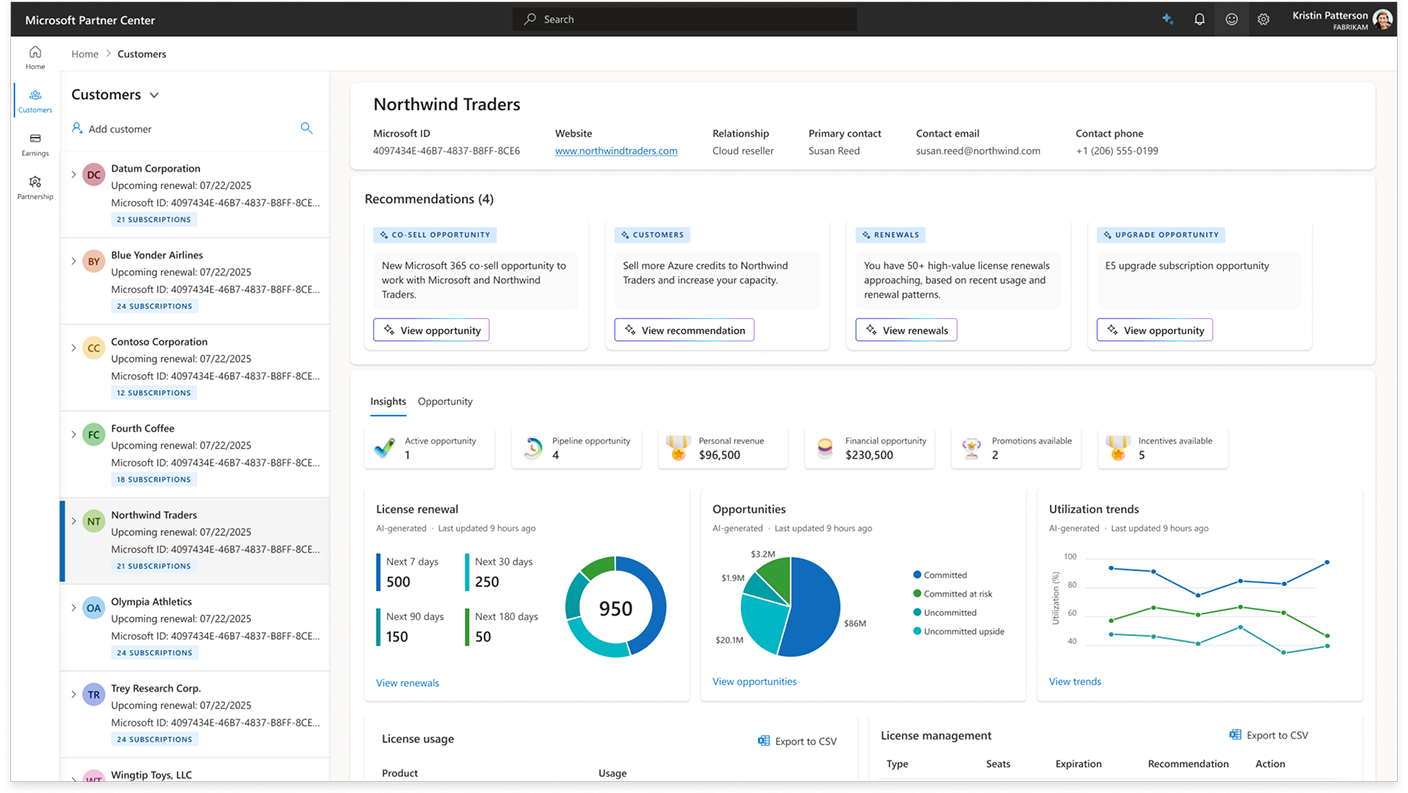
Surface recommendations or action-oriented insights in a central location and across relevant workspaces
Provide real time customer and reseller data in a centralized location
Ensure proper account hierarchy structures are set up to surface real time reporting and allow for impersonation into the account when necessary
-
The unified “single pane of glass” brings together customer subscriptions, renewals, churn signals, and insights into one intelligent interface. This reduces friction and helps partners make data-driven decisions at scale.
-
Full Visibility: Access all customer data, renewals, and insights in one centralized dashboard.
Efficiency at Scale: Reduce context switching and operational overhead with streamlined workflows.
Actionable Intelligence: Surface AI-driven insights and recommendations directly in context.
Growth & Retention: Identify upsell, cross-sell, and renewal opportunities before they’re missed.
Trust & Transparency: Build stronger relationships with customers and Microsoft through clear data visibility.
AI Assistant for Intelligent Support
-
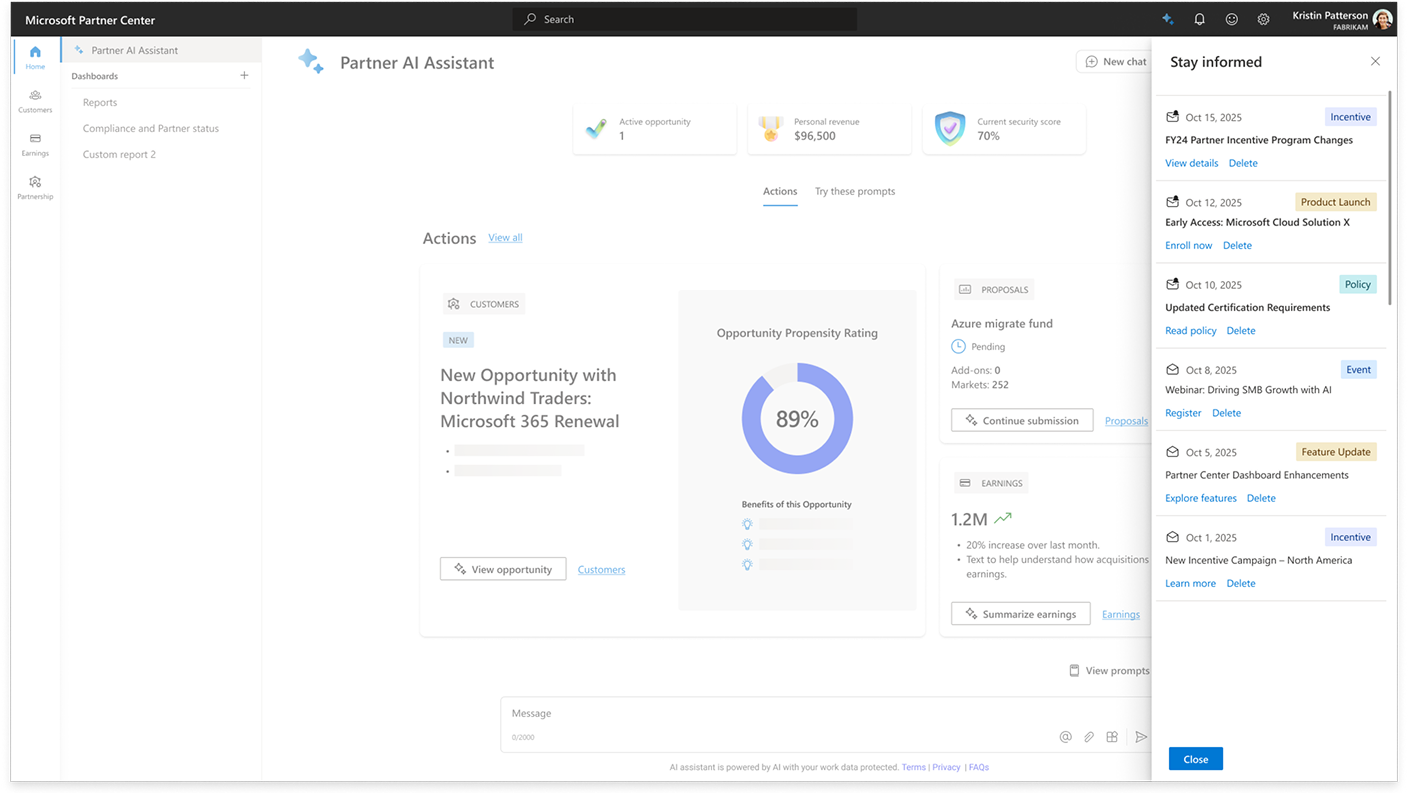
Use Partner Center notifications or create a new area for Microsoft updates to Partners as a central hub for Partners to access current information on program changes and receive proactive guidance regarding anticipated questions.
Leverage AI Assistant as a point of contact to surface information about program changes and manage questions
Email updates of critical information/latest news
-
Display upcoming updates and incentives in Partner Center through various channels including RSS feeds, emails, action center, within a dedicated hub for updates from Microsoft, or on the potentially new immersive home experience.
-
Timely Notifications: Partners receive updates as soon as they are available.
Proactive Planning: Enables partners to prepare for program changes and deadlines.
Clear Visibility: Centralizes updates across multiple channels for easy access.
Maximize Opportunities: Helps partners act on incentives and program changes to drive growth.
Drive Transparency and Growth with AI
Comprehensive Customer View
-
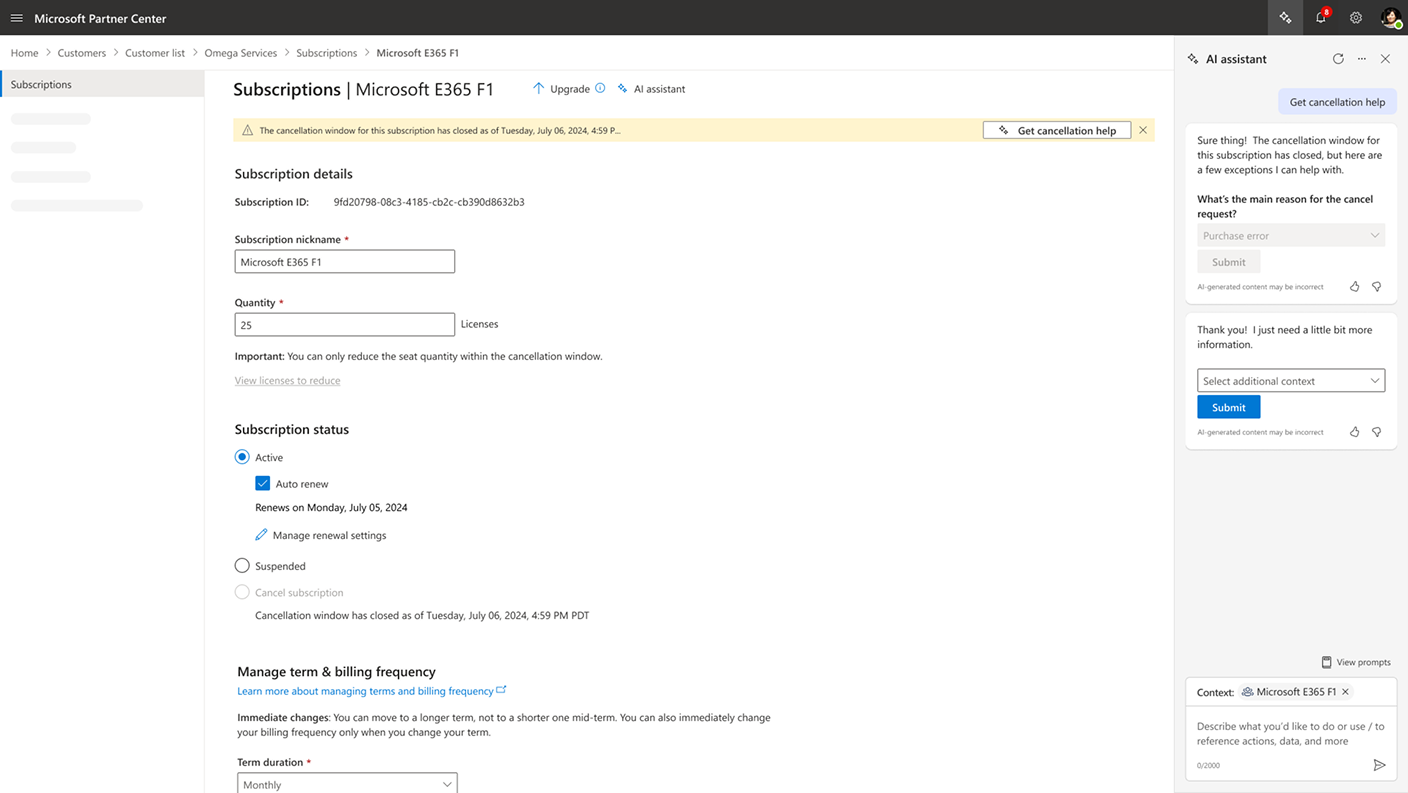
Analyze and understand the biggest problems Partners are most often escalating to create processes and train AI support around them.
Train AI Assistant on MS Learn material and inside business processes to surface and leverage it as support contact .
Create an embedded support ticket experience in Partner Center
-
Use AI to provide context-aware support directly within Partner Center. It can identify and assist with issues, provide troubleshooting steps, walk Partners through guided solutions, and conduct customer eligibility checks.
-
Saves Time: Partners resolve common issues quickly without waiting for human support.
Reduces Errors: Guided, step-by-step instructions help partners take the right actions.
Increases Confidence: Partners understand the next steps and feel supported throughout the workflow.
Boosts Productivity: Less downtime and friction lets partners focus on strategic business tasks.
Stay Ahead with Updates
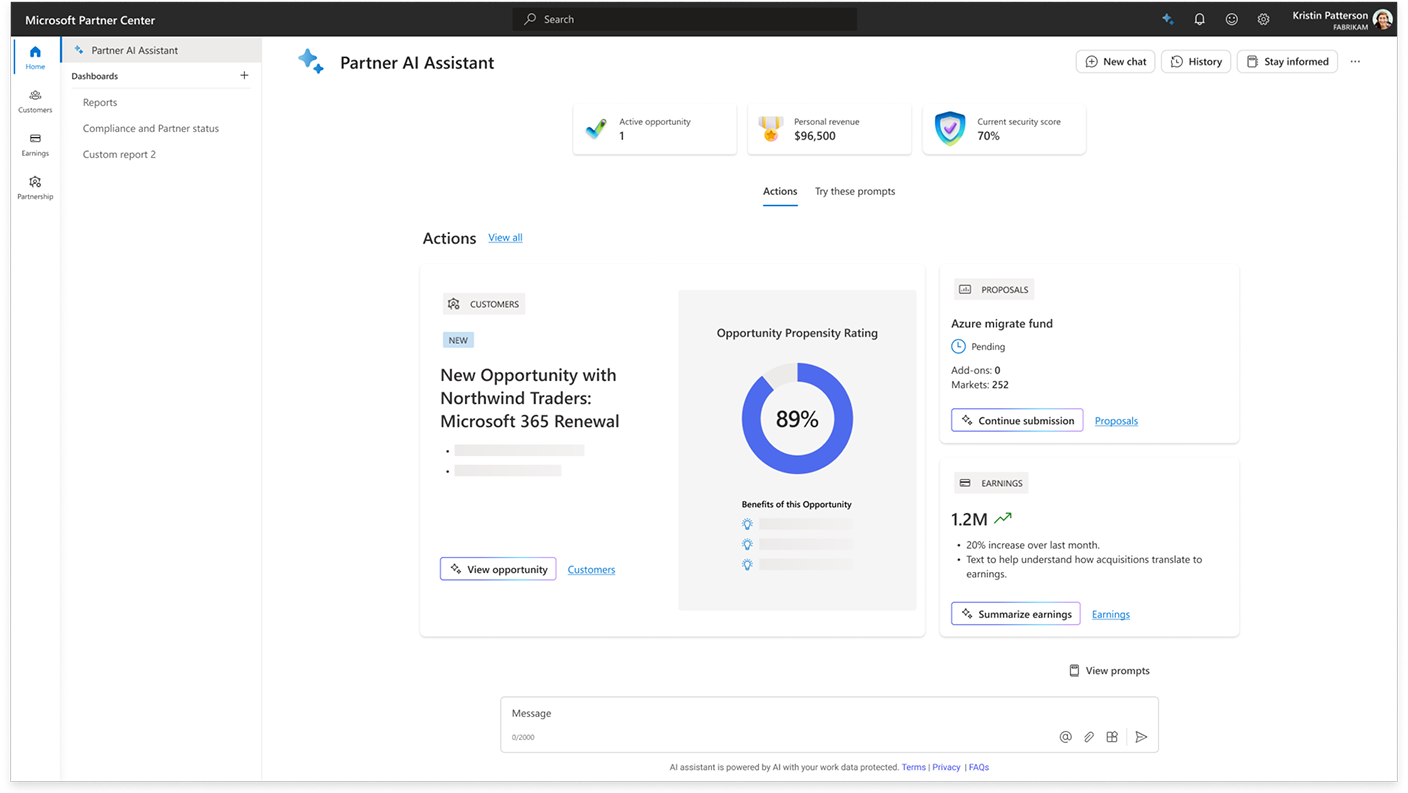
-
Leverage AI to provide full visibility into the overall sales process with the ability to manage and track referrals and opportunities, identify customer needs, recommend appropriate Microsoft solutions, and facilitate procurement and deployment of solutions
-
Use AI Assistant to surface the most relevant leads, actionable insights, and clear feedback loops, potentially in the new immersive home experience.
-
Focus on What Matters: AI identifies and prioritizes high-potential leads for stronger pipeline efficiency.
Accelerate Growth: Data-driven recommendations help partners capture new opportunities and boost revenue.
Improve Transparency: Clear feedback and performance visibility build confidence and accountability.
Strengthen Customer Relationships: Insights enable more tailored, proactive engagement with customers.

Partnered with cross-functional teams and stakeholders across product and business strategy to align on a vision
resulting in…

Accelerated Growth Potential
Simplified experiences and
actionable insights enable partners
to reach more SMB customers, expanding Microsoft’s footprint in
an underserved $420B market.
Key Outcomes
Secured executive alignment and influenced product roadmap

Stronger Partner Empowerment
Centralized data and AI-driven
tools empower partners to act confidently, improving engagement, retention, and sales performance.

Operational Efficiency Gains
Integrated, intuitive workflows
reduce friction, minimize manual steps, and increase partner productivity across the customer lifecycle.
Enabled strategic clarity and shaped subsequent high impact initiatives across Microsoft commerce and marketplace.

Data-Driven Decision Making
AI surfaces insights and transparent feedback loops, helping partners
and Microsoft make smarter, faster business decisions.